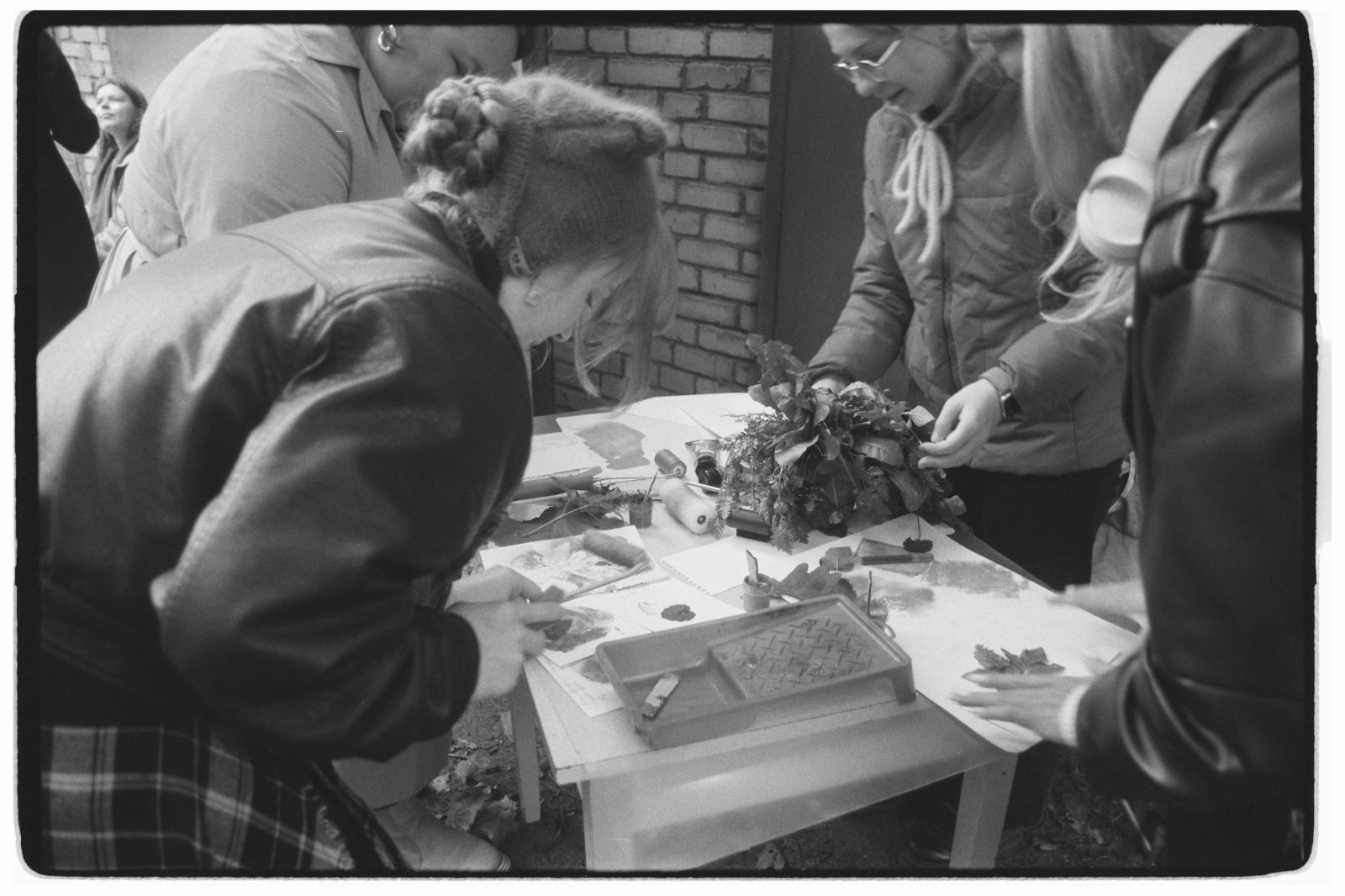
Bioregionalism in Action
Bioregionalism is not joined; it is practiced. There is no membership card. There is no degree program required. There is no permission to ask. The work is what people do where they live, in the company of the people they live among, on behalf of the place that holds them. What follows is a working list of practices: starting points anyone can begin, universal across places, organization-agnostic. They are simple. They are not easy. The discipline is in returning to them.
01 / Learn your watershed
Trace the water from your tap back to its source. Where does it come from? What river, what aquifer, what reservoir, what creek? Whose ancestors lived where it is held? Then trace the water from your drain forward to the ocean. Through what pipes, what treatment plant, what outfall, what stream? What does it carry with it that it should not? Walk a stretch of the line at each end. Knowing your watershed by foot turns an abstract civic responsibility into a concrete one. The water is the place asking to be cared for.
02 / Walk the land
Pick a place near home. A trail, a creekside, a city block, a beach, a vacant lot. Visit it across the seasons, in different weather, at different hours. Take notes. Photograph what changes. Notice what arrives and what leaves: the migrating birds, the late-summer asters, the mosses that go dormant in drought, the children who play after school. The practice is the noticing, not the destination. Over a year you will know things about a place that no map can tell you, and the place will know you back.
03 / Know the names
Learn five native plants and five native animals well enough to greet them by name in the field. Learn the language and lineage of the Indigenous nation whose homelands you live on, and how to say the name of the place in that language. Look up the treaties, the displacements, the ongoing presence; do not assume any of these stories are settled. The names are how a place stops being scenery and becomes a society. They are also how respect begins: by getting the address right.
04 / Source bioregional
When you can, choose food, materials, fiber, and energy that come from your bioregion. Know the people and places they came from. Buy from the farm whose fields you can drive to, the bakery whose flour was milled from regional grain, the woodworker whose lumber was felled within a day’s journey. Use the energy your watershed actually produces. The practice is not purity; it is direction. Every dollar spent locally is a dollar that strengthens the relationships that hold a place together when conditions get hard.
05 / Map something
Make a map. Of your block, your watershed, your community’s stories, the trees on your street, the places people gather, the places that have been lost. Use any tool, from pen and paper to GIS. Share it. Maps are how a place becomes legible to the people in it: what is here, what is missing, what is at risk, what is shared. A map made by people who live somewhere is a different document than a map made by people who do not. The bioregional movement was started by mappers, and mapping remains its most generative practice.
06 / Show up for place
Bioregioning is not a private practice; it is civic. Attend a council meeting, a watershed council, a planning hearing, an Indigenous-led action. Speak when there is something to say and listen when there is something to hear. Volunteer for a restoration day. Sign onto the petition that a neighbor is circulating. Run for the small board, the small council, the small commission. Most of the decisions that shape a place are made in rooms with very few people in them. Be one of those people.
07 / Practice the calendar of place
The Gregorian calendar marks dates; a bioregional calendar marks events. The first salmon’s return. The last frost. The day the swallows arrive. The night the elk bugle. The week the camas blooms. The morning the air smells of smoke. The afternoon the river turns brown with rain. Keep a calendar of these events for your place. Notice when they shift. A place lived in long enough begins to teach a person time, and a calendar of place is one of the few honest records of how a climate is changing in any specific watershed.
08 / Tell place-stories
Every place is held together by the stories the people in it tell. Some stories are old and have been carried by the same families for generations. Some stories are new and are still being argued over. Tell the stories you know about the place you live: how it got its name, what happened on the corner before the building was there, what your grandparent said about the hill, what the elders teach about the river. Listen carefully when others tell their stories, especially when they do not match yours. A place without stories is a place that can be sold without anyone noticing.
A note on practice
None of this requires permission, funding, or formal training. It does require returning. The practices above are not single actions; they are habits. Pick one and begin this week. The practice is what makes you bioregional; the rest is decoration. When the practices feel ordinary, when they no longer require remembering, that is when the work begins to take.
If you want to go deeper, the Mapping pages outline the practical work of bioregional cartography, and the Principles page sets out the values that hold these practices together.